Creating Your “Couple’s Bucket List”

bucket with two plants closeup

Maybe you have your own bucket list, but do you have a “Couple’s Bucket List”? If not it may be a good time to do so if you are in a long-term, committed relationship. I have put together some thoughts as how to get started.

Why Make a “Couples Bucket List”?

  1. It can help activate discussion and  clarify what things are important to you as a couple.
  2. It can create a sense of cohesiveness with creating shared goals.
  3. It can build shared purpose.
  4. It is a first step toward designing a life you want together.


What Goes on a “Couple’s Bucket List”?

  • This can be shared goals. Things you have decided that are important to you as a couple.
  • This can be experiences you wish to have together.
  • This can be a place you want to go visit as a couple.
  • This could be a restructured way of living or being for the both of you.

Here is an example of a “Couple’s Bucket List”. This is not mine or anyone that I know. Just one I created to help you have some ideas as to what yours might look like. There is no wrong or right way to do this. It is what fits for you and your loved one.

John and Susan’s Bucket List

  1. Travel to Europe
  2. Weekly Date Night
  3. Learn How to Tango
  4. Weekend Cabin in the Woods
  5. Learn to Scuba Dive Together
  6. Totally Free Weekends with No Work
  7. Volunteer for Habitat for Humanity as a Couple


bucket with two plants longshot with table and two chairs

The Steps in Putting Together Your “Couple’s Bucket List”

  1. Schedule some time with your sweetheart and brainstorm some ideas as to what might possibly go on your “Couple’s Bucket List”. Be spontaneous and carefree with your ideas. Plus,  include some time to be more thoughtful and reflective as you generate  ideas.
  2. Then go back through together and decide what is a fit for both of you.
  3. Create your list and put it somewhere where you both can see it. You might consider just for fun to put your list on a bucket shaped piece of paper you create or download from the internet.
  4. And of course lastly, begin to take some steps toward living your bucket list. You probably will not work on all of these at once. That may be a bit overwhelming, but you can choose one item that you both feel strongly about or that you feel is doable for the current time and take a small, concrete step toward this shared dream.

Variations of Bucket Lists for Couples:

  • A general list that is more long-term in nature
  • A more specific time oriented list, for example for a particular season or time frame.
  • A list of what you want to do before you have children or while you have children or when your children leave home.
  • Do as a yearly couple’s  ritual at the beginning pf the new year. After the first year it would be an updating. Your thoughts will change and shift of course with time and as you grow as a couple. Plus, it would be a great time to do a check in and see what progress you have made on your “couple bucket list”.

So what is on your bucket list???  Have fun creating your own special “couple’s bucket list”!

A Very Simple Calming Breathing Technique for All Ages

pink rose from tanna's back yard

Looking for a way to calm yourself or help your child calm himself. Try this very simple breathing technique. What makes it a bit different is that it is extremely simple and tries  to incorporate your memory of a pleasant sight and smell. And most of all it is Simple, Simple, Simple. And I have decided so many times those are the things we can remember easily if we are feeling stressed and over the top.

Here is my version of this simple technique:

MY ROSE

1. Visualize a beautiful rose. Or you could imagine a rose garden if you wanted. Maybe your favorite color of rose or roses. (If you are explaining to a child, you might say “Think about a beautiful rose.”)

2. Take a deep breath and smell your rose. (Remember the wonderful smell of a rose and keep this in mind as you are breathing in your rose.)

3. Hold the wonderful smell for a few moments. (This would be at the top of your incoming breath. Hold in that great smell, enjoying it.)

4. Let your breath come out with a sigh or just naturally as you think of your rose.

5. Continue smelling roses until you feel calmer.


Alternatives to the Rose:

  • You can of course use any flower that you love and that you like the smell of.
  • You can also choose another sight that has a pleasant smell that you particularly like. This might be the ocean and the smell of the ocean OR it might be trees in a forest and the smell of a forest. This of course will be an individual thing as to what fits for you.

You might consider if you want to do the rose as your “calming anchor” to make sure you on purpose smell some roses outside or at a flower market and breath in their fragrance and do this exercise to build in a memory.

I have decided you never know where you might pick up a good idea. In this case, I was watching the movie, Danny Collins. There is a part where his young granddaughter is having trouble calming herself. Danny’s granddaughter has a diagnosis of ADHD.  The father tells her to remember her rose and then he walks his daughter through a similar kind of exercise that I have added to a bit.  I always want to give credit to sources that inspire or plant a seed for an idea for me.

I wish you the best in finding your own special rose or rose garden!


“The Good, The Bad and the Ugly” of the Digital Age and Our Relationships

texting at the dinner table color animated

How are we all doing when it comes to our highly digital age and our relationships? That depends. Because there really does seem to be The Good, The Bad and The Ugly when it come to how the digital world has affected our relationships. I am referring to: cell or iPhones, which entails instant communication, texting, tweeting, face timing,  Then we have face book, you tube, web surfing, etc,  So let’s look at some of the positives and the negatives of fast paced, instant communication with access to lots of people with many blurred boundaries. It is hard to keep up. A stopping and mindfully looking at all of this for families and couples is so very important I think.

The Good

There are positive things about our current ways of communicating. Here are some of them.

  • We can have almost instant contact with our loved ones.
  • We can use our digital communication for the good. We can stay in closer contact with the special people in our life.
  • We can communicate with children and partners to assure us they are safe and protected.
  • We have multiple ways of expressing our affection for our children and our loved ones.
  • Children in two home families can have access to both homes via our digital world.

The Bad

  • We can very easily fall into spending more time with our iPhones, iPads and laptops than our loved ones.
  • Our children may feel ignored if we become so immersed in our face booking or you-tubing or web surfing that we are not able to focus on them when they need it.
  • Our spouses may accuse of us of spending more time with our facebook friends than with them.
  • Digital communication is not face to face and is not a replacement for time one on one, physical time with our loved ones that is needed for a healthy relationship.

The Ugly

  • Inappropriate or fuzzy boundaries when texting, emailing, face booking can lead to 3rd party relationships that can aid the beginnings of emotional or physical affairs
  • Airing martial or couple disagreements or separations on face book or other social media forums can lead to damage that is difficult to repair in a relationship
  • Online pornography addition that will strongly impact most marriages in a negative way.


How to make the good things even better AND the keep the “bad” and “ugly” in check and within boundaries . . . 

  1. Mindfully use today’s technology to strengthen your relationships. Use it to connect more, but not in place of physical connection. We need touch and physically seeing and being with one another. Texting, face booking, and cell phone conversations are nice supplements, but they are not a replacement for the “real deal”.
  2. Really listen to your loved ones about their feelings about your time spent on social media or texting, etc. Not only what they are saying but tuning into their body language and behavior in relationship to all of digital communication.
  3. Develop firm, healthy boundaries to protect your relationships in regard to whom and how you communicate with others. 
  4. Set the tone for what is healthy and what is respectful in your home with your children and teens when it comes to all of their electronic devices. Be a good model and follow through with rules you have put in place.
  5. Take a break from technology when you are having family or couple time.  You can really focus and “be with” your loved ones when you do.  You might consider meal times as a “no phone” time in your family. Or when you have special family or couple outings.
  6. Consider the bedroom as “off-limits” for all electronic devices. Our bedrooms can be our sanctuary away from the world and a special place to be with our loved ones.

laptop and person in bed


I have to say we are all in a wave of more and more electronic communication and are feeling our way as to what is most helpful and healthy for us. I think the key is to thoughtfully “choose” what is best for us and our loved ones. We do have a choice. Best wishes with your own, choices to create a balance that includes your loved ones.


“Inside Out” Movie – It may not be what you think . . .

inside out feeling control panel

I decided as a family therapist I should go check out the new movie, INSIDE OUT. As I knew I would have children talking with me about what they saw and their reactions to it. Plus, a nice lead in as to talking about feelings. What I found is that INSIDE OUT is probably really suited  best for older children and adults. I found lots of adult couples taking the show in the day I went. And for good reason, the messages are really best for those with some abstract reasoning.

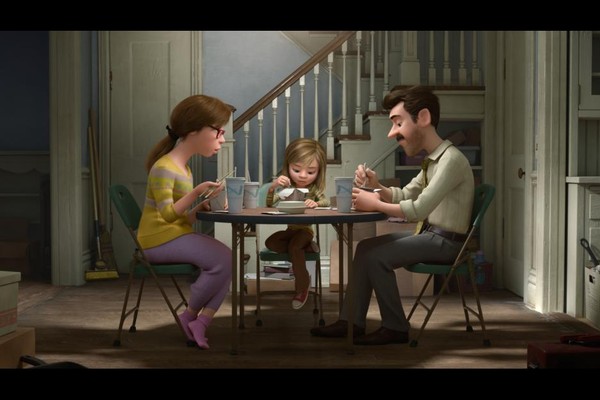
The show is coming from the perspective of 11-year-old Riley’s feelings. The “stars” of the movie are: Joy, Fear, Angry, Disgust, and Sadness. Riley’s mind or “command center” is directing her actions. Riley has just moved to a new city due to Dad’s new job.  Riley’s past experiences have been happy ones in general and the move and transition to a new city and new school has her confused and upset as she tries to transition to her new life.

You might ask so what are some of the core messages that someone might come away with? Well for me I found the following:

inside out joy and sadness looking at memory globe

  1. All feeling are helpful. It is sort of interesting that in this movie, Sadness  turns out to be the hero and saves the day. We sometimes feel we have to work hard not to be sad, when really we need to let our children and loved ones know it is ok to be sad. That sometimes acknowledging the sadness can help us back to the happy feelings we want to have. And yes, there is a time when we need to move past sadness and move on to more positive feelings. Our feelings let us know if we need a course correction. And sometimes this is a bit of a journey.
  2. We are constantly making memories and those memories will have our own individual filter, which may be different from others.  I think that as parents we have to remember our children and for that matter our spouses or partners will not always see things as we do.
  3. “Being With” our loved one is one of the most important things we can do when they are going through a hard time. I do think that in the end this message comes through with the 11-year-old Riley connecting with her parents and beginning to feel better.
  4. It is never too late to process our feelings and make sense of them.  Even if we have gone through a hard time and things are not going well, we can always shift gears and come back and understand what has happened and work through it.

I like to tell my clients (children and adults alike) that feelings are our friends. They are our emotional guidance systems. They help us know what is really going on with us and what we may need to do to get back to where we want to be.

All this said, this movie is not a light, happy-go-lucky movie. And some feel it is sad or a bit dark. I had an elementary aged boy tell me recently he thought the movie was sad. When I asked which part, he said lots of parts. This was his individual perspective. There are some fun, humor parts. Some of these parts of intended for children and some for adults. The movie does has more depth than some folks would anticipate though.

I did feel the movie probably over simplified how memory works. And put a bit of a dark spin on it. Even though I do know that negative memories do have more affect on us than the positive ones. One reason we want to try to keep the happy memories at a much higher level to keep them in place in our brains.

inside out riley and her family

http://www.commonsensemeda.org is an organization that can be helpful at times in giving some thoughtful insight for parents in movies that come out. Some of the parents on this site who reviewed this movie had some concerns about the incident were the main character 11-year-old Riley steals her mom’s credit card and runs away and when she is re-united with her parents that they do not have a discussion with her about these actions. Another reviewer talks about preschool children crying over sad incidents in the movie. Most of the positive reviews tended to come from parents who had older elementary children or teens.

Note:  As with all movies parents have the huge responsibility of deciding what is a good fit for their individual child and what they are ready to see. Not an easy thing. This movie is probably best for children who have some abstract reasoning in place.

We can always have discussion with our children after viewing a movie. I think one of the best part of a movie is the dialogue it creates. So if you feel there was a missing piece then by all means talk with your child about it.

If you are not feeling sure what you think as to your child seeing this movie, you could do a date night and go see it as parents first. This I think is always a helpful strategy for a movie we are not sure about. I do feel this movie does a nice job of highlighting for parents some of the core messages I mentioned above.

Best wishes in deciding if your child is ready for this one. If they are, there are some good core messages to glean from it.

Please note that pictures are taken from the Disney / Pixar website.


Feng Shui Your Heart – Letting Go of What No Longer Serves You

flower heart 7-1-15

Ever feel like your heart is heavy with sadness or anger and it just feels stuck there? Or maybe it feels all lit up with anxiety and just won’t go away.

The key is to let go of what no longer serves you.

A couple of years ago, I spent some time researching Feng Shui practices and decided I needed to Feng Shui our home. I felt like there was just too much “stuff” in our house. That it was feeling too crowded and it just did not feel soothing and pleasing to me. So I went through the house and really looked at everything with the question, “Does this bring me joy?Does it feel good to me?” At the end of the day I had a significant pile of “stuff” at the front door. And the less crowded space felt so much more soothing and pleasing to me. I had taken out what no longer served me and it let in a feeling of openness and joy. I am not completely sure my husband felt the exact same way. He did ask when he came home that night “What is all that pile of stuff at the front door for?” and I sweetly told him, “Oh, I have just been Feng Shuing our house.”

I was thinking our hearts are like our homes in that sometimes they can become cluttered with stuff we no longer need, things that no longer serve us. You may have someone who has done you wrong and it has stayed with you for a very long time. When you look at it closely you may find that you are the only one who is still re-living that upset and still feeling badly about it all.

It may be time to let go of past upsets  to make room for more joyful feelings of happiness.

Forgiveness or letting go is not about condoning or saying it was right what someone did to you, it is about letting it go so you can let the good come back into your life. You may find this to be a process, not a one time event. That is ok. But what you will find is that the more you let go, the more you will have room for the good stuff.

You may also find that your heart is filled with too much to do with not enough down time. Or you may feel certain activities or people leave you stressed or anxious. You can ask your self, “Does this activity make me feel happy or bring me joy?” Or “Do I feel this helps me fulfill what I consider my purpose or what I want to be doing?  If so there is room for this in your heart. If not, it may be time for a bit of weeding.

Letting go of those things that you really do not need or want will leave you with space for a more happy, peaceful you.

So I hope you will find time to Feng Shui your heart. You will be glad you did. Taking time to “de-clutter” your heart is well worth the effort.