
Is your life balanced and are you doing what is important to you? I think BALANCE is one of the key words that is so very crucial for well-being for all of us. I love my life, most of the time. But … Continue reading

Is your life balanced and are you doing what is important to you? I think BALANCE is one of the key words that is so very crucial for well-being for all of us. I love my life, most of the time. But … Continue reading

Life has a way of throwing us a curve ball, at times adding challenges that seem to gray every thing around us. Due to a recent illness within my family that ended with a surgery, I went to that gray place. I was thinking to myself, “Ok you are a therapist, what do you want to do here to feel better?” I found Rick Hanson’s book: Hardwiring Happiness peeking through my most recent stack of books by my reading chair. I began re-reading parts of Rick’s book and found one of my favorite parts about taking in the good. I like to call it “letting in the good”. I really like this concept of letting the good come in even when it feels dark and gray. Our brain does gravitate to the “dark side”. As Rick Hanson likes to say the negative experiences are like velcro and the positive experiences are like teflon. The brain has a negativity bias that is built-in to keep us safe. Understanding this principle helps us to know we have to highlight and focus on the good to experience it more easily. I’m not saying we should not let our self feel sad, that is important as well. But we have to be vigilant not to go to the “dark side” and hide from the light that is always there for us.
Out of the weeds and tangles of life great beauty can be found.
A bit later I decided to do a bit of writing in my gratitude journal as this is always a mood lifter. As I began to write I thought why not do a more descriptive writing entry in my gratitude journal to “let more of the good come in”. First of all let me say a bit about “letting in the good”. The following is a summary of the first three of the four steps of what Rick Hanson calls “taking in the good”. In this case it is in past tense as you are remembering and recalling.
LETTING IN THE GOOD
You can use this process of “letting in the good” as you write in your gratitude journal. For some a gratitude journal may be more about listing what you are grateful for that has happened to you that day. In a Descriptive Gratitude Journal you would want to do the following:
I hope you will try this enhanced gratitude journal writing. The good feelings will have a better opportunity of becoming a part of you, living on. And of course the more you journal about your positive experiences the more that you will draw more positive experiences to you.
Best wishes for happy days ahead!

We all want a PERFECT life, with all good things always coming our way. Nothing wrong with that. What we envision will many times be what we get, just not always in the form we think it will come or with the exact timing we wanted. We are all human and live in a human world with constant change and things not always going in the way we planned. Being able to go through those times and still be happy is a sweet thing indeed. It means we have some control over our emotions and have some choice. Isn’t that a grand thing.
Please Note: I do want to say I am not promoting that we ignore our upset or sad or angry feelings. Those are all valid and should be acknowledged. I am promoting that we allow ourselves to go beyond this when we are ready to do so and know that it is possible. I am saying basically we do not have to stay stuck in an emotion that we have more choice that we all think.
In the end, it is all about perception, how we view something and how we choose to respond. We can choose happiness. It is just a step away. It may not look the way we originally thought it would, but it is still there. So go for it. It does not have to all be perfect to be happy. So step out and dare to be happy even when all is not perfect. You will be glad you did!

Can we really unplug, relax and enjoy? I say yes, we can do this. But it is a very conscious choice we make in each and every moment I think. As of recent due to increased job, community and personal commitments I have found myself in a place to really re-look at this concept.
As I begin my vacation travels this week, I see lots of folks completely plugged in and checked out to others around them, including themselves. I am not suggesting we all throw out all of our electronic devices we are all a bit addicted to. But I am suggesting that we do a check in with ourself every so often as to the balance of being emerged in our high-tech environments and the “crazy busy” life so many of us create for ourselves AND taking time for self-care and letting joy and peace flow into our live. Thus my own check in as I take some time away from it all.
As I sat on a plane earlier yesterday, I sat across from a father who had his young baby son lying on his lap. The baby was asleep with his little arms flung out above his head, a content and utterly peaceful experience on his face. To his side dad had another child who was resting on his shoulder, cuddled up and asleep by her daddy. It was all so sweet and very calming to be sitting by. A bit of a “wake up call” for me to take more time for this beautiful, peaceful calm together time with my loved ones. Without this balance we can feel disconnected and very un-centered.
So I am off to begin this process to re-balancing once again. And yes it is an over and over process I think. It is so easy to get off course, but always possible to get back on a path of more joy and peacefulness.
Some questions you might ask yourself as you too are trying to access and get back on the path:
I hope you will enjoy this beautiful spring time emerging around us and use it as a time for re-birth and new beginnings toward better self-care and reaching for all the joy and happiness you deserve.
Much peace and love to you all.
 Your child is angry and beginning to escalate. Or you know your child is anxious and not sure how to feel better. I want to share a simple, fun technique designed for children I recently learned about at the Oklahoma Play Therapy Association’s Annual Conference. Dr. Jennifer Baggerly, PhD, Professor at the Counseling and Human Services at the University of North Texas at Dallas presented the Butterfly Technique. Here is how it works:
5. Continue “Butterfly Breathing” until your child feels more calm. Model and do this with them as they learn this technique.
Note: One website that shows the Butterfly Breathing technique with the 1,2, 3 count is: elfenworks.org/butterfly. In addition you may go to iTunes and look at the Butterfly Breathing app put out by Elfenworks, which is free. The Elfenworks site has a butterfly breathing script and additional information in regard to their butterfly breathing technique.
To add to your “Butterfly Breathing” you can add “Butterfly Hugs”. Here is how you would do butterfly hugs:
Good luck with your butterfly breathing and butterfly hugs and remember you may find it helpful for yourself to use as well. And the more you model for your child the more he or she will probably use it!
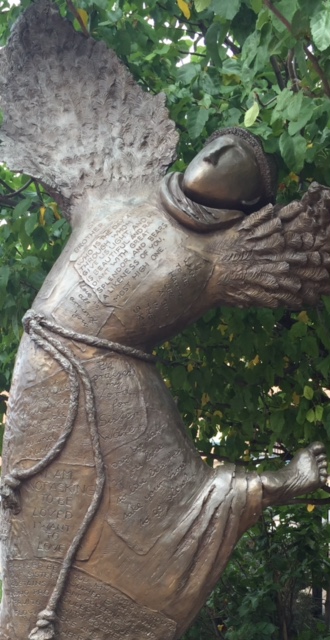
We mess up, we make mistakes, we are human! We all have times we are not happy with something we did or did not do. So we might begin by telling ourselves: “It is ok. I am human and I can make mistakes. I am still capable and worthy of being loved.”
We are destined to be our best version of our self. Getting there means being ok with our human mistakes and “mess ups”. This is not to say that we do not make amends or ask for forgiveness when appropriate. It means we forgive ourselves and find compassion for ourselves. This is the first step of course to doing the same with others in our life. It is the first step toward going where we want to go.
Best wishes in your human journey of loving and forgiving yourself. It is a basic for being at peace and continuing on to where you truly want to go!

Let’s look at the number 1 stress buster for the holidays – SIMPLIFY. So what does it mean when we say simplify? Does it mean do nothing or give up on the holidays? Absolutely not. Let’s look at the basics … Continue reading

With the holiday season upon us, it sometimes feels like all we hear from our children is “what they want for Christmas”. Many of us hope that we can help our children develop a more balanced approach to what they want / need and helping others with what they want / need. The focus of this blog piece will be on the end of teaching our children about giving. “Giving is a basic value that makes our society a humane and civilized one.” This is not always easy as there is just so much of us during the holiday season. So it becomes about us too as adults coming to terms with our own balance of the two things. So it may start there with us examining our own hearts.

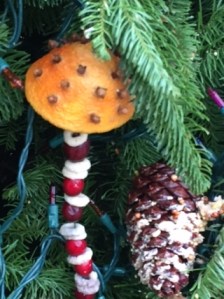
I decided to re-visit this topic that comes up for me ever so often in my own family. I was at Philbrook Museum of Art over the Thanksgiving holiday with my family and saw the beautiful outdoor Christmas tree decorated for the bird’s to nibble on. It made me think of the trees I have created in the past with my children when they were younger for the birds. And thought again of the issue of making sure I create this “self-care / other care” balance in my family. So here are a few ideas on the side of giving to others.

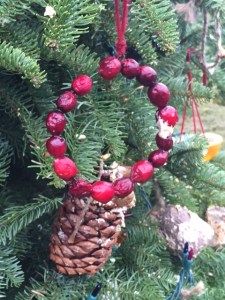
I hope you will find your balance in your family of self-care and other care. And that you will give your children this holiday season the gift of giving. Happy Holidays and Best Wishes! Tanna
Want to encourage your family to be thankful and appreciative of one another? I am always trying to think of ways to encourage this kind of interaction to take place in my own family and with the families I work with. We might remember to be thankful of those outside our family, but at times we overlook those closest to us. So let’s use Thanksgiving as a start point in remembering to show our thankfulness for our loved ones.
I have always liked the activity at Thanksgiving where you go around and tell one thing you are thankful for.This is a fun one to do around the dinner table. This is fairly easy for most people to do. Most of us can think of one thing that we are thankful for. It is good to remind folks it can be a small thing. It does not have to be large. I have enjoyed this version, But I am thinking of another version for this Thanksgiving that I thought I might share.
In this version you are encouraging the family to reflect about what they like about their family as a whole. It is easy to take family for granted. And Thanksgiving is a perfect time to think about this. Now it may be that you do not like everything or very much about your family. But my guess is that with some thought you can think of one thing you are grateful for. I might note that family can be the family you have created and gave birth to or it can be your family of origin.
If you really can not do this version, then go back to what you are in general thankful for. But you can use this as a time to think to yourself or with your partner or spouse what family attributes you wish to create that later your children will be thankful for. That is a bit deeper. But sometimes thinking ahead can be a good thing. What we project out is many times what we get back. It is sort of like goal setting or creating an intention.
I wish you all the very best of Thanksgivings!

I sometimes suggest a “Happy Journal” for a client who needs to do more focusing on the “happy stuff”. I at times will ask the entire family to partake in this simple, but very effective activity. I always like to remind folks that “what we focus on is what we get more of”. Thus, for those who want to have a happier family here is a tool to encourage your family to look for the happy in their lives.
The Set Up for Beginning Your Happy Journal Family Adventure
I hope you will try this whether your family is just you as a couple or if you are a couple with a young child or if you are a single parent family or a blended one. It is all good, encouraging each other to see the happy things that are all around us!!!
 creating branches