“What We Are Thankful For . . . ” Activities for Families and Couples

Focusing on what we are thankful for is always uplifting and helpful on keeping us on the right track. When our lives are filled with appreciation and thankfulness we feel joyful and happy. So . . . what better time to begin this kind of daily practice but at Thanksgiving time!
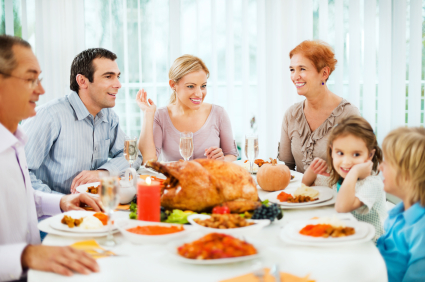
Family at the dinner table at the Thanksgiving day.

One activity that I feel is a great Thanksgiving meal activity is when the family or participants each tells something that they are feeling thankful for.  This can be done with a variety of “starter statements”. Pick what you feel best fits your family or gathering of people.

“Let’s each go around the table and tell what we are most thankful for that has taken place this last year.”

“Let’s each go around the table and tell of something we are feeling thankful for.”

“Let’s each go around the table and tell of some things that have happened recently that we are feeling thankful for.”

“Let’s go around the table and each tell of something that we feel thankful for in regard to our family. ”

  • You can combine some of these above statements or make up your own ‘starter statement’. You will probably know what might work best  for your family or gathering.
  • I would also suggest that you be the one to start the process to get it going. You can even set up another member of two ahead of time who would be willing to share to get things going.
  • You can also set it up with your starter statement suggesting that those who would like to share something they are thankful for can do so. Basically giving an “out” for those who are not comfortable doing this activity. If nothing else it gets those folks thinking about being thankful and models for them an attitude of ‘thankfulness’. I have done some activities in the past that are similar in nature as to taking turns sharing, going around a room or table and have found some folks are just not very comfortable doing this kind of sharing. Forcing sharing is probably not the most helpful. This kind of statement might look like the following:

“As it is Thanksgiving, I thought it might be fitting to let anyone who wants to share about what they are feeling most thankful about to share with the group as we are eating our Thanksgiving meal.”

You can alter this statement to focus on whatever you feel is most fitting for your family or gathering.

Here are three more concrete, fun ways to express feelings of thankfulness during Thanksgiving.

  • Create a paper turkey and cut out some paper feathers for folks to share their feelings of thanks by putting them on the feathers and then attaching them to the turkey. Folks can write what they are thankful for and then sign at the bottom of the statement written. OR create a turkey with a base in which everyone can stick feathers that are attached to toothpicks into it. Folks can use the feathers to fill in things they are thankful for. Another possibility would be each person creating their own turkey and placing their own collection of feathers in it. The base for these kinds of projects can be an apple or pear or pinecone or anything that makes you think of a base for a turkey.  Or you could have a turkey making table with a variety of food pieces or craft materials to create a turkey, along with feathers to create the thankful thoughts.  I can see a fun creative activity for kids and adults alike.
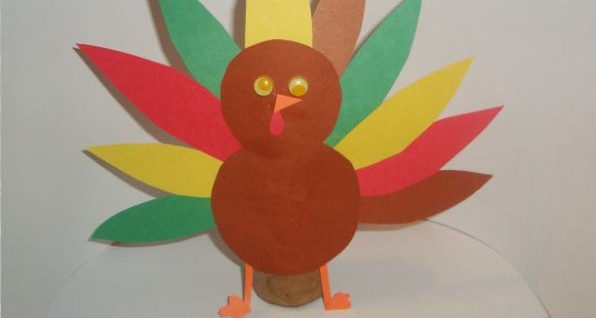
thankgiving turkey with feathers

  • Use butcher paper or some kind of roll paper to cover your Thanksgiving tables and have crayons available for children and adults to draw pictures or write on your paper cloth what they are feeling thankful for. Another option might be each person making a Thanksgiving placemat with their thankful thoughts or pictures on it. 
  • Have a tent name tag at each place setting at your Thanksgiving table and have each person write their name on one side and what they are thankful for on the other side. They can add their own decorative work to their name tag. This could be done before the meal or during.

NOTES:

1.These activities can be done as a couple too. Sometimes we feel these kinds of activities have to be done in a larger group. They actually can be done very well in a small group or couple format just as well. In fact, you may find more personal feelings of thankfulness coming out of these smaller groups.

2. The verbal sharing of what we are thankful for can be done as an ongoing activity at your mealtimes or other group activities, such as weekly family meetings, etc. You could choose one night a week, for example each Wednesday night or every Sunday night or whatever meal you all share together on a regular basis will work. This can be so much more than just a Thanksgiving activity, but a ritual of being thankful for what we are blessed with. Hope you have an opportunity to verbalize your feelings of appreciation and gratitude on a regular basis with your family. It has a way of creating more good things in our lives. So here is to remembering our blessings!
Connecting Through Co-Creating Your Family Picnic

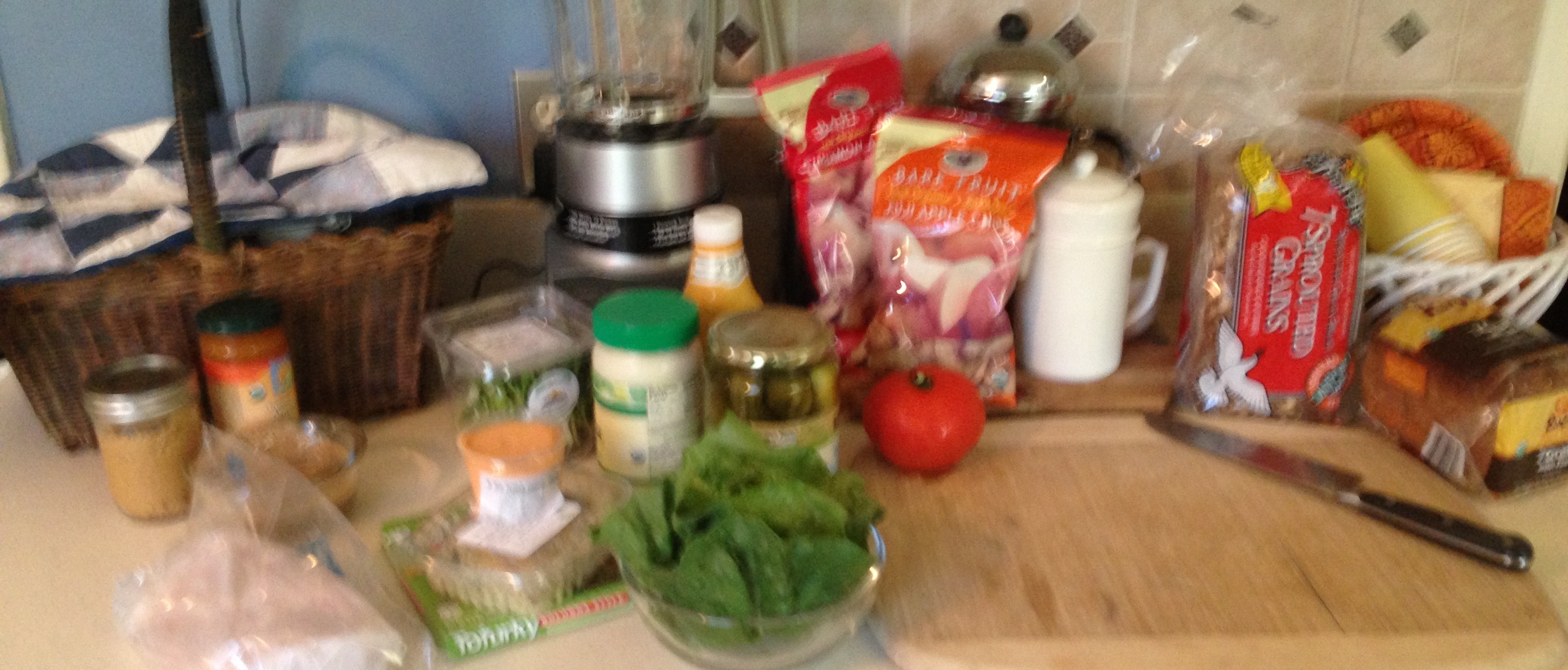
Picnics are not just for summer! The fall leaves and weather is so mild here still in OK. Consider a picnic in which you co-create it with your family. Instead of Mom (or in some cases Dad) making up and preparing the picnic basket or back packs, consider the family doing this together. I had a recent experience in which I was preparing everything and one of my family members said, why don’t you let everybody just make their own picnic lunch. I was thinking, “I like that idea!” I could have just put everything out on the table and said have at it. Instead, I decided to make some food stations to make it a bit more fun and make it easier to find everything. I created the following stations:

IMG_3955

Sandwich Making Station

Fruit Station

IMG_3953

Cut Up Your Own Veggie Station

IMG_3954

Trail Mix Station

Drink Station

I had a variety of things to choose from at each station. I think this is the part that makes it fun, having some choices.  Everyone in the kitchen together, cutting and chopping veggies and folks making their own brand of trail mix, etc. has a very connecting feeling to it. Of course you can adapt this food making adventure to the age of your children. It is a great opportunity to be together and interact, while creating your own unique and personalized picnic lunch.  So much better than one person doing it. And a nice message to all the family members that everyone can contribute and have fun!

I would suggest you have a sack for each member to put their “creations” in. This can prevent confusion over whose food is whose.

The cool thing about picnics is they can be a part of many different settings: on nature trail walks, at the park, at the zoo, in your back yard OR even in the middle of your living room floor on a blanket!

Remember you can do a picnic any time of the year. Of course, I suppose fall, spring and summer have the most appeal. Even a mild winter’s day might be fun. So enjoy your co-created picnic lunch wherever you live and no matter what season it is!

Renewal of Wedding Vows – An Ongoing Re-Commitment

wedding-ring-vows-2How important are marriage vows?   I went to a wedding this last weekend and couldn’t help but to begin to think about them. Wouldn’t it be great if we did a yearly redo of our vows.  There are many folks who at some point do a renewal of wedding vows. I know my husband and I did. But really don’t we all have to make continuing re-commitments to each other. Going through the thick and thin can be tough at times. And making our wishes and intent for our ongoing relationship expressed verbally can be very powerful. It not only shows commitment, but it creates a vision that we will consciously and unconsciously worked on. 

When I heard this young couple expressing their love and vows to one another it brought back my own vows and feelings of commitment to my own relationship. I think this happens for many folks. And I think every time we attend a wedding it is a gentle reminder of our own vows to our spouse. So by all means accept those wedding invites and recall your own vows and what they mean for you as a couple.

So if it has been a while since you took your vows, you might even consider doing a renewal of your vows. It does not have to be exact vows you did initially. In fact, we grow and change and your vows may look very different the second time around. I actually think that second set of vows may be more powerful as you know what it means to be in a marital relationship.

You might even consider a yearly redo.  Doing them on your anniversary would add an extra punch to them. A wonderful reminder of what you want and hope for in your relationship. I always tell my clients “What you think, is what you get!” Basically, meaning if you share with your spouse  your specific intentions and wishes for your relationship you are more likely to get it.

Renewing of vows can be done with just the two of you or can be done with the witnessing of your friends and family. Both ways will work. The witnessing adds a special covenant that makes it public how strongly you feel.  Regardless your words (and of course the followup action) is what counts. Remember you are the creator of your relationship and what you want it to look like! Best wishes on your vows of love and commitment!

Ways to Create Family Fun and Connection in Your Celebration of Halloween

pumpkin-family-m

As Halloween approaches, you have an opportunity to mindfully choose how your family will celebrate Halloween.  Here are some things to get you thinking as to how you might create time to connect and have fun together as a family. This may look different for each family.

Considerations for Creating Family Fun and Connection:

  • As parents you can explore what some of the options are in the community as to events and activities being sponsored. Find ones that match with the age of your children and dovetail with your specific values. There seem to be a very wide range of some events that are very young child friendly with a “no scare” environment all the way to very adult, at times violent scary events. As parents offering ones that you feel fit your children’s ages and personalities make good common sense of course.
  • As you consider things to do, remember some of the best fun is “homemade fun”. This can be to everything from carving or decorating pumpkins to making Halloween treats together as a family to decorating the house or yard together for the holiday to hosting a back yard carnival style party for some other families.
  • Consider a family meeting where you present some ideas for some family fun activities that would be possibilities during the Halloween time frame. These go on of course throughout October with Halloween being the crescendo. Only presenting activities that you are ok with makes this a win – win situation. Ideally being able to let each member choose one thing they really want to do for Halloween would show respect for everyone’s ideas and wishes.
  • Balancing family fun and letting children attend their own events happen for many families. But without careful planning, especially as children get older there can be very little time for family activities. Finding a way to keep adolescents involved with your family activities can be even more challenging, but it is possible. Allowing for children and teens to have their time with friends is a natural progression of growing up, but having some family time is ok and if done in a fun way and with their involvement in the planning can work and be a way to keep your family connections alive and healthy.
  • Enjoy your time together really “being there”. This would mean putting on hold phone calls, texting, etc during your activity. Including all family members in this tech free day would mean so much more one on one communication and real face time with each other. Yes you will probably have some groaning and complaining over this limit, but that’s ok. Let everyone know why – that you really want to spend time with them so to do that everyone is going to go native for a bit and just talk and focus on one thing at a time. It is worth it. Everyone likes to have this real-time and focus.

Good luck in creating your own family fun. So many times some of these activities turn into family rituals and traditions. And oh what fun memories they create!

Handshakes and Hugs

I am passing this blog piece on as it is a wonderful addition to my last post on creating greeting rituals with children. These are very fun, simple handshakes and hugs! Tanna Strom

dbsenk's avatarKindergarten Nana

Research shows that the one of the best ways to build connections between people is eye contact and touch.  I was always looking for good ways to foster relationships so I loved including special “handshakes” in our morning routines.  We sometimes called them handshakes, other times we referred to hugs.

I introduced these one at a time at the beginning of the year.  The children would be standing in a circle, I would demonstrate the handshake and do it with the child on my right, I always tried to remind the children to turn and look at their partner while they were shaking hands.  Then that child would turn and “pass the handshake” to the next child, and so on around the circle – back to me.  After the children knew a variety of hugs, the special helper would choose which handshake we would do each day.

For most of…

View original post 597 more words

A Pinky Hug, A Cool Handshake . . . Create Your Own Welcome Ritual with Your Child

handshakes_0007Ever do a “pinky hug”? Or have your own original hand shake? Creating your own special greeting with your loved one can be fun and unique to your relationship. And why not add a bit of fun to our greeting. There are all kinds of potential greeting rituals. Maybe a high-five or a hip or knuckle bump or a series of actions that you design with your child.  One of the fun parts could be coming up with your own “signature greeting”. I found a wonderful blog piece that I will re-blog for you to look at the many different handshakes this teacher has used with her children.  So be on the lookout for this blog piece that will appear on my blog. It is titled Handshakes and Hugs by Kindergarten Nana. She has Thumb Kisses, Butterfly hugs, Fish Hug and much more to consider as a potential greeting.

thumb kiss

Another possibility could be a special phrase or term of endearment phrase you use only for your child. If you have more than one child, each having their own greeting will give them each a sense of being unique. I do think checking in with your child as to if they like what you are using is a respectful thing to do.

I have heard many terms of endearments or nicknames. Most I think are liked by children, especially if they are positive and have a nice feel to them.  Being mindful and thoughtful as to choosing something that does not have any kind of negative connotation is important I think. What we may teasingly use, can be hurtful to a sensitive child.

I also think as children get older they may or may not like the special name or ritual of greeting, so keep alert to their feelings and do a ck in with them. Creating a new greeting can make sense as they grow.

A shout out to the mom who shared her “pinky hug” ritual with me.  This is simply the pair looping their picky figures.  This might be nice if you have a child who is embarrassed by a full hug. Of course for some the traditional full hug may be just the ticket.

Good luck in coming up with your own special connecting ritual with each of your children. This ritual will live on in your child’s memory way after they are grown.

Criticism, Defensiveness, Contempt, Stonewalling and Their Antidotes

A36W5JEnd the most destructive patterns in your relationships: CRITICISM, DEFENSIVENESS, CONTEMPT, and STONEWALLING. There are antidotes to these very common patterns or interactions that occur in relationships. Researcher and Therapist,  Dr. John Gottman, PhD calls these destructive interactions the 4 Horseman of the Apocalypse.  At a recent training in Dallas, TX this last weekend I was able to complete Level 1 of the Gottman Institute’s Bridging the Couple Chasm.  Drs Julie and John Gottman’s approach for couples counseling is a research based program based on 40 years of scientific research. I am summarizing the information on these destructive patterns and their antidotes.

THE 4 HORSEMAN OF THE APOCALYPSE & THEIR ANTIDOTES

Criticism Ø :  Attacks on Personality or Giving Negative Attributes   →     COMMUNICATE WITH A GENTLE START UP: “I Feel, About What, I Need”

Defensiveness Ø : Self-Protection with Righteous Indignation or Playing  Victim    →     TAKE RESPONSIBILITY: Accepting Your Part in the Problem

Contempt Ø : Addresses with Superiority     →     SHOW APPRECIATION and RESPECT: Positive Communication and Admiration

Stonewalling Ø : Emotional Withdraw    →     PRACTICE SELF SOOTHING: Staying Connected Emotionally

Becoming aware of these 4 horseman: Criticism, Defensiveness, Contempt and Stonewalling is the first step. Then trying to replace them with their antidotes is the next step.  Best wishes in your quest to have more healthy communication. It can lead you to a happier, more fulfilled relationship.

You can go into the Gottman’s website to find John and Julie Gottman’s books, cds, cards, etc.  www.gottman.com

happy couple

Relationships with Ex-Spouses – Considerations When Children Are Involved

co-parenting-during-divorceThe “Divorce” is in process and you wonder what kind of relationship should I have with my soon to be Ex? You are thinking I have children with this person, so how does this work?  I see families in my practice that are in the process of a divorce or who have recently undergone this change in their family structure.  When children are involved it adds another layer of complexity as to what kind of relationship one should have with their ex-husband or ex-wife. I have found that what works for one family may not work for another. There are many different kinds of situations and unique details for each family. But, I do think there are some general things that are important for almost all families that are going through this major shift in the family structure when it comes to your post marriage relationship.   So here are some things to consider.

Consider the BIG question. ” What is most helpful for my children?”

  • Children need developmentally appropriate information about what is going on with your relationship with their mother or father. This means letting them know what is going on in a way that they can understand for their age. For example: A young preschool aged child may just need to know that mommy and daddy are not happy living together any more and that they feel they will be happier if they live in two separate houses.  More information can be shared as you feel it is needed or when they ask.
  • It ,of course. is not helpful for children to know the intricate details of what has happened.  Sharing information about an affair that has taken place is not helpful. Or sharing information about all of your soon to be ex or ex’s faults and inappropriate behaviors will not help. This simple advice is not simple in that as children get older they will ask more questions and want more specific answers. The bottom line is to try not to bash the other parent, as your child will need to have a healthy relationship with the other parent.  Sometimes just relaying that you had grown up problems that made it too hard to live together any more will work, at least initially.  Deciding together what you want the children to know and sticking with this agreed upon explanation is best. Yes this might be hard, but the most helpful for children. As children age, you may feel it is needed to share more information about the relationship that ended.  This information needs to be given in a thoughtful and mindful way. It may be that more details are needed by children or teens.  If you are not prepared, when your child asks you can tell them you want to think about the best way to answer their questions and then you can followup after some careful consideration.
  • As to the relationship with your soon to be ex or your ex, this may look different for different families. One thing to consider is if the relationship you want or have is confusing for your children. For example: In most cases, continuing to live in the same house can be confusing, if the marital relationship has ended. There may be exceptions, but in general this is hard for children to understand. As to how much time do you spend with your ex-wife or ex husband and your child together. This really does vary with each family.  For some children they think mom and dad are getting back together when many activities are done together. It is a complex question and there is not a simple answer. There also is what you feel is most comfortable. If it was a mutually agreed upon divorce, it is easier. But if one of you wanted the relationship and the other did not, this is more complex. Again being thoughtful and mindful as you create this new co-parent relationship will help.

Another question to consider, “What is best for you?”

  • If your spouse is trying to keep you in the relationship and you know it is not possible, consider how to help them accept this in a way that is least painful.  Acknowledging your part in the relationship ending can help in later forging a new co-parenting relationship. 
  • When someone new comes into your life, more potential shifts may need to happen with your spouse. Lots of good, open communication with all parties will go a long way.
  • If you find your situation is complex, find a good therapist to help you process and come up with what might work best for you. 
  • Being realistic as to what will work and not work is a reality. Again, you will have your own unique situation and you will do the best  you can with it. That is all we can do.

If your children can see their parents have a co-parenting relationship of respect and cooperation this is ideal. If there are circumstances with safety issues, etc. it may not be perfect, but your compassion and respectful language in regard to the other parent will help. Best wishes in finding ways to form this new relationship that is most helpful to your children, yourself and your ex-spouse.

Negative to Positive Talk with Your Loved Ones

happy_face_wwwDo you ever catch yourself feeling like you are being really negative and you don’t know how to turn it around? Most of us have had this kind of experience and it can be frustrating. We want to tell someone about our upset feelings, yet still be positive. I am proposing two different techniques for your consideration. These are both very simple one and two sentence statements.

Consider the use of the phrase “Even though . . . ” 

This would involve first of all acknowledging your feelings of upset and then ending the statement with what positive way you are going to handle this upset feeling. Here are some examples:

Even though I am so mad I could scream,  I am going to choose to take a deep breath and ask you what happened. ”

Even though my feelings are hurt, I want to try to understand why you did this.”

Even though I am unhappy with what you did, I am choosing to ask that we sit down and talk about this.

Even though I am feeling  anxious about what you are saying, I am going to stay calm and listen to all you have to say.

These statements respect and acknowledge your feelings and at the same time leave a door open for positive discussion and dialog.

These are of course the beginning of a dialog. But they set the tone for positive communication and potential joint problem solving.

Consider the use of the use of the dual words, UNFORTUNATELY, FORTUNATELY

UNFORTUNATELY, I am very stressed out and everything feels like too much. FORTUNATELY, I  know that I just need a bit of time by myself to feel ok again.

UNFORTUNATELY, I got so upset I yelled at you when I should not have. FORTUNATELY, I  know when to admit I was wrong and apologize.”

UNFORTUNATELY, I was so mad that I said some things that I really did not mean. FORTUNATELY, I have calmed down and can think more clearly and tell you want I need to say respectfully.

UNFORTUNATELY, I have been really depressed about our son’s behavior and I know that is all I talk about. FORTUNATELY, I have come to the realization that we need to talk about other things too that are positive.

This technique can be used for yourself personally to help you change negative thoughts to positive ones.  And as I have shown this  can also be used as a way to shift more negative thoughts and feelings to more positive ones with your relationship talk. 

I like both of these techniques as they are a nice balance of being able to be respectful of our upset feelings and at the same time offers a way to turn them into positive, hopeful statements. Try them and see what you think!

Fill the “Buckets” of Your Loved Ones and See Happiness Grow

good feelings bucketI ran across the children’s book Have You Filled a Bucket Today? A Guide to Daily Happiness for Kids by Carol McCloud  just recently while at a local bookstore.  I have another book for children on this topic, but really liked how this one was done. For those of you who are not familiar with the “Bucket” concept, this is how it works. Please note that this is for all ages!!!

  •  Everyone has an invisible bucket (this is how this particular author explains it to children). The bucket is to hold your good thoughts and feelings about yourself.
  • You feel happy when it is full and sad when it is empty.
  • We need each other to help fill our buckets.
  • To fill a bucket you simply show love to someone (for example a hug or kiss), say or do something kind, or make someone feel special.
  • You can also be a “bucket dipper” by taking out some good feelings by saying hurtful or mean things, being critical, making fun of someone, etc.
  • You feel good when you fill someone else’s bucket

I might add I feel it is also important to let children know they can help to fill their own buckets by using “positive self talk”. What we say to ourselves is crucial in how we feel about ourselves. Our thoughts can add or take out good feelings from our buckets. 

I also think it is helpful to let children know that it is ok to tell your family that your bucket it low. And that you can help to fill it. This is ditto for couples too!

Family or Couple Bucket Activity:

One fun way to make this concept concrete is to have a bucket for each person in your family. Family members can write each other notes of love and appreciation and put them in the buckets. Everyone might even decorate their own bucket and put their name on it. This could be a fun family activity. Or even for a couple this would be a nice concrete way to show your love for each other.

Good luck in filling those buckets!