Creating the Balance of Nurturing and Limit Setting with Your Child

Woman and young girl embracing outdoors smiling

Balancing helping your child to feel loved and nurtured AND setting limits can feel challenging. At first look they can feel like opposites. But they are not. I see nurturing and limit setting as the two sides of the same coin. Both are needed to make a whole. One without the other does not work. If it is all nurturing and no limit setting, the results may be children who have difficulties with self control. If it all limit setting and no nurturing , the results may be children who may feel they cannot do anything right or have a low self esteem or who do not feel loved by their parent. Let’s look at what we can do  to make sure both of these sides are covered in our families.

Strategies to Create a Well Rounded Parenting Style of Nurturing and Limit Setting     + (  ) = Ÿ

  1. In families sometimes parents get stuck in playing out one of these roles as the other parent plays out the other role. For example one is the nurturing, listening and I’m here for you parent and the other is the limit setter / enforcer parent. It has a bit of a good cop / bad cop feel to it. And it can cause some problems and issues to evolve. For the parent who is only the limit setter, it can feel like they are the “meanie” to the kids as they are only seeing this one side of the parent. And for the parent who is only playing the nurturing role they appear to be the “fun” or “nice” one. There are lots of pieces to this dynamic. One is that one parent may see a strong role being played by the other parent, so they take on the other to balance things out. Understandable, but it gives a one sided view to the child of each of the parents. It is so much more healthy to share in these two roles, each nurturing and limit setting.
  2. Communication as parents is critical in the balancing of the roles that the parents play and in making sure in general that both parents are nurturing and limit setting.  Really seeing the pattern in your family can help to assess and shift if need be to create a more healthy balance.
  3. Listen to what your children are saying to you. Are they calling you “mean”? Are they saying something like “Daddy always lets me.” or “You never listen to me.” We can learn a lot from what our children say as to how they view us. Really tuning in to what your children say to you can help you to see if you are balanced and covering both roles. Of course, children are not always happy with a limit, even if they are getting lots of nurturing. But the intensity of upset and the depth of feeling will be very different. And the ability to accept a limit will be more apparent with a child who feels nurtured and loved.
  4. If you catch yourself feeling like you only are playing one or the other role, then you can shift and change that. If you are more of the disciplinarian, then you can purposefully do more engaging,  relationship building with your child.  If you notice your spouse is the one who sets all the limits and you hang back as it looks like it is being taken care of,  you can change this by on purpose being more involved in setting limits or boundaries.
  5. If you are a family in transition, with a separation or divorce in process, it is very important to try to communicate and create a healthy balance with these roles. So many times the parent who has the children in their physical care the most, tend to fall into more of the limit setting role and the other may fill the weekend “let’s have fun” role. I might note, it is the opposite in some cases.  Both is needed of course, but if only one role is played at the one house, then there is a missing piece to the puzzle and an in-balance that is not healthy.
  6. Let children know why you limit set or have boundaries or ask that they do a particular thing. It can help when they know that you limit set to protect and you do this because you love them. You might look at an earlier post I did on May 8, 2014, Setting Boundaries with Love.  https://creatingbranches.com/2014/05/08/setting-boundaries-with-love/  It has some example of how you can combine limit setting with words of love. This makes limits and boundaries so much easier for children to accept.

Last of all I feel I should say limit and boundary setting is a topic of it’s own. Positive guidance and discipline and how we do this as parents does make a difference. Future blog posts will feature some key ideas in regard to positive guidance and discipline.


Just remember you are providing a solid foundation for a child who feels unconditionally loved with a high self esteem and a child who can self regulate and care for others when you act both as a nurturer and a limit setter. This is one of the reasons why being a parent is one of the most important roles you will ever hold.     

Letting in the Good – Hardwiring Happiness

California Poppies and Gazanias

As I woke up this am, I saw the filtered light peeking through my blinds, sparkling sunlight among the trees. I thought of the lovely phrase, “letting in the good” from the new book I have started reading, Hardwiring Happiness by Dr. Rick Hanson. He is an acclaimed  neuropsychologist whose focus is on the brain and how we can re-program our brain for more happiness.

It’s about “letting in the good” that comes into our life, really letting it sink in and remain a part of us. I love this idea and am up for letting more good come into my life. What about you?

Dr. Hanson talks about how our brains have evolved from their early beginnings, millions of years ago where we have what scientists call a “negative bias”  due to survival instinct and the primitive environment that surrounded us, with a high need to protect ourselves. You might think of tigers on the loose, hunting for food and shelter, competing for a mate, etc. Our evolving brain came from dealing with life and death on a daily basis. So still today our brains are always scanning for danger and potential threat and has a bias to remember negative things that occur or happen to us.

Finding ways to rewire our brain to have a more “positive bias” in its normal resting mode has been were Dr. Hanson has focused his work. His premise is that we should “let more of the good in” to sustain our happiness. I am doing a short recap of his main ideas of how to make this happen.  He calls this the HEAL process.

H     Have a Positive Experience.

E     Enrich It.

A     Absorb It.

L     Link Positive and Negative Material   (He says this last step is optional in the process)


In having a positive experience, this can be one that has happened or one that you go out and create. Let it feel emotionally rewarding.

In enriching the positive experience, he suggests that you fully open all of your good feelings around this experience. Let it fill your mind and body. Intensify the experience, really focusing on the small details and the lovely feelings you are having as you think about it. Think about how this is good for you in your life and how it is making a difference.

In absorbing a positive experience, you can think about the experience sinking into you. Using visualization can help to highlight and make it more powerful. You could see the experience flowing down into your body with a lovely soothing feeling. You will have your own imagery that fits for you.

The fourth step is more complex and optional. I would suggest reading his material on this process. The end result is to uproot negative material in our brain.

Hardwirng for Happiness book cover pic

Dr. Hanson’s web address is: RickHanson.net. You can check here for tools, practices, videos and information. You can purchase his book at Amazon.com.

Here is one of Rick Hanson’s videos on “Letting in the Good”.

I am excited to finish his book and hope you will find his material helpful in creating a more positive biased brain.  You will find it does feel good indeed to enrich and absorb more of the good stuff that comes your way.  I hope you will experiment a bit as I have been doing and each time a good feeling occurs, take 10 seconds or so and let it really sink in and enjoy.  You will be re-wiring your brain as you do  Here is to all of us  “letting in the good”!


“It’s All Good” – 5 Strategies for Using Positive Self Talk That Works

Man and a Woman with Their Heads Together Smiling

A year or so ago my son was trying to reassure me something was not a big deal. He simply said, “It’s all good.” I liked that simple reminder. So I find myself using it when I am feeling a bit down or discouraged. In general, I have found positive self talk to be tremendously helpful in shifting my thoughts to a higher and more helpful place. I know many who have found this to be true.   Here are some practical and concrete ways to use positive self talk.

5 Strategies for Using Positive Self Talk That Works

1. You must believe what you are saying. This is one of the things that really activates our brain to move in this direction. If you are saying it and really not believing it, then it will probably not work. Our minds will definitely pick up on that kind of discrepancy. I am sure  you have heard the term fake it til you make it. And there is some truth to it.  So with this strategy, you can pretend with as much passion as possible and this may be enough to help things along. But ultimately for best results you will need to believe it.

2. Use power words. Basically use words that carry some punch and have a passionate feel about them.  Putting out this kind of message will attract things that are similar to your message. For example: “Everything is  falling into place.”   or “An amazing day full of positive energy and smooth sailing is here before me . ” Using as much detail as possible helps too.

3. Remember to use a current tense. This of course sends out the message that It is” Happening” and that we are not talking about in the future, but we are talking NOW. And what is better than that.

4. Use your positive self talk as much as possible.  Of course just like anything else, the more we do it, the better we get at it. Thus, the more successful it is.

5. Don’t get discouraged. Keep doing your positive talk, even if it does not feel like it is helping immediately. Your brain just needs to catch up with your new thoughts. Give it some time, it will work.

Note: For those of you who want a more scientific, researched term we can plug-in the words of Cognitive Behavioral Self Talk. This is about how our thoughts affect our feelings and behavior. It is all a circular kind of pattern. So once again, I might say, “It’s all good.”


Five Ways to Show Your Loved One YOU Are Really Listening

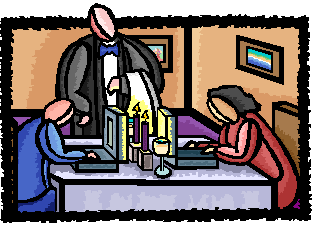
couple not communicatng with laptops open in restaurant

“Are you listening?” Does this sound familiar?  So are we really listening to our loved ones? We probably think we are. Most of us don’t on purpose not listen. We just don’t always listen in a way that our loved one feels really heard. 

When I work with couples in my practice I find this is a common communication issue that brings distress to the relationship. So what are some things we can do to make sure we are REALLY listening to our loved ones?

Five Ways to Let Your Loved One Know YOU are Really Listening

  1. Stop what you are doing. This may mean putting your phone or computer down to rest. Or turning off the TV or whatever you may be doing. And making eye contact with your partner or spouse. You are setting the FOUNDATION for a meaningful interaction.
  2. Listen with the intent of hearing and reflecting what your loved one is saying so they can feel you have REALLY and truly heard them. This may not be as easy as it sounds. But it will pay big dividends in your relationship. When someone reflects what we are saying we know we have really been heard. It feels so divine to be heard at this level.
  3. Avoid giving your feedback and opinion. That is the hard part I think. Because we all have something we feel needs to be said. But if we can hold off and just listen and “be there” it will create a feeling of “YOU really matter to me and I want to know what YOU are feeling and thinking.”. By all means do share your feelings and thoughts if you are asked. But remember it is really more about “being there” to listen.
  4. After you have really listened, you can respond in a way that shows you have heard your partner’s feelings not just their words. This may mean listening at a level to be able to detect the underlying feeling beneath what is being said. You might even want to name what you think you are hearing. “So you are really angry about . . . ” or “After all the hard work on the meal, you feel unappreciated.”
  5. Ask what your loved one needs from you? This may be something you can do or maybe not. But the fact that you have asked shows you care and want to do what you can.

couple communicating face to face in restaurant enlarged image

Being listened to is a true gift. In our crazy busy lives we don’t always connect in a way in which we are really listening. But when we do it is so very magical. It makes us feel loved and cared for and that is what most of us really want in our relationships.

So hope you will take time to give this special gift to your loved one today!


Too Busy for Self Care?

IMG_3776

Are you too busy for self-care? Too busy for the good stuff?  You are not alone. I am currently in process of putting together a presentation for a group of therapists on self-care and have found myself ironically just too busy to do good self-care for myself due to this extra project. I finally got a hold of myself and said,  “ENOUGH. You must take time to care for yourself or you will not be of help to anyone else.” My body actually did some of this for me this last week and had me not feeling well, needing to cancel some commitments. I always joke with my family that my body will just shut me down if I do not listen to it.  And it truly does so.

First of all what is good self-care?

  • Starting with the “basics”. Enough sleep to feel refreshed when you get up in the morning. Healthy food that makes you feel good and keeps your body in good working order and full of energy.  Let us not forget, lots of water which has been shown to help alleviate stress and of course helps to flush toxins from the body. Then there is physical exercise, which can come in many forms. It can be a simple daily evening walk or going to the YMCA two nights a week, riding your bike or whatever is a fit for you to help keep you physically healthy.
  • Then we have emotional health that is very intertwined with the body. The mind-body connection is strong and research continues to grow in this area.  Stress affects your emotional and physical health. How you are doing emotionally makes a difference as to how you will fare physically. This is common sense that we all witness. But our busy lives keep us in a place where we do not always think about what we really know instinctively about our bodies. One thing to consider about your stress is how you view it.  You have a choice in how you choose to look at something, even if you can not change the circumstances. By choosing to think in a way that helps you to feel better, you can be in a more peaceful place.
  • Putting your joy and happiness up at the top of your list is important. This allows you to then share that happiness with your families and loved ones. Balancing family needs and personal needs can be challenging. But the more balance the better you will feel.

So what can you do when you are just too busy to do good self-care???

  1. You can PRIORITIZE. Meaning you can decide what is most important and rank in order what you feel you most need to do. At the top of the list should be good self-care. And yes that is not always easy. It many times means having to let go of something else. There really are only 24 hours in a day. Even though I so want more at times. But 24 is REALLY enough. When you live each moment in the present and know you will never have it all done and it is ok, you can feel so much more peaceful.
  2. You can say NO to some things. You can let go of having to have your list completely done each day. You can do the best you can and feel good about what you did accomplish. You can remind yourselves you do not need to be perfect. You are wonderful just the way you are!
  3. You can do mini self-care breaks. Maybe you really do have to finish a work project or take our child to practice each night. But  you can incorporate ways to take breaks with your work. Maybe it is a simple 5 or 10 minute walk outside to regroup. Or maybe you decide you can carpool with another parent for your child’s practice. You may feel you need to have a large block of time to do self care. I would invite you to consider ways to incorporate smaller bite sized self care breaks. I know for me more self care happens when I use this approach.

I will be exploring the issue of self-care in more detail in my fall quarterly  newsletter. If you wish to subscribe to my newsletter, you are welcome to go my website and go into the Well Being Newsletter tab and sign up there. My website address is as follows: www.stromtherapy.com I might add I have an archive of all my past newsletters in this section of my website.

Take good care of yourself. YOU are so worth it!

My Favorite Resources for Divorcing or Divorced Parents

child crying as leave with dad in car

My favorite, simple, easy to navigate, concise book  for divorcing or divorced parents is the TransParenting Parent Handbook. It’s been around for a while, but I really like it. The purpose of this book is to provide information on how to help children adjust to a changing family structure due to divorce. To access this book go  to their website: www.transparenting.com  .  Go to the Purchase Transparenting Materials tab. It is currently about $16. to purchase. This has been used in the Helping Kids Cope with Divorce program.

As I was recently in this site, I found it refers to another website: www.UpToParents.org . This is an excellent site that contains information in the way of articles and videos that are to help divorcing or divorced parents to reduce conflict and focus on the needs of children. It contains a Parent Corner and a Professional Corner.

In addition I discovered a website called: www.ProudToParent.org , which is intended for parents who have never married.This is a unique website set to address a group that is not always included in the conversation of two homes for children.

One last new discovery is a website for parents who still feel they can save their marriage and are trying to manage this in between, difficult situation. This website is: www.whileweheal.com . So if this would be a situation that you are trying to manage, I hope you will check it out.

This is a challenging time for children and parents both, but with collaborative, co-parenting it can be managed in a way to help chlldren adjust in the most healthy way possible.


Helping Your Child Have the Best School Year Ever

schoolbus

It’s a new school year. A new fresh beginning. We all want our children to do well, to excel, make good grades, have friends . . .  It’s a common parent feeling. Standards seem to be higher and higher each year as to what schools expect of children. Sometimes the environments are great and very conducive to learning and sometimes not so much. Maybe your child has lots of friends or maybe not. That changes from time to time,right? So what can you as a parent do to help your child with this new year ahead?

Helping Your Child Have the Best School Year Ever

  1. Be your child’s SUPPORT person. Your child needs someone in his or her corner, someone who is there to really hear about his or her feelings and be a support in finding ways to address their problems. It is a crucial role we play as parents. Yes we want our children to be independent and learn to solve their problems on their own, but they need a solid home base too. You can be that touchstone for your child. You are most equipped for this role as you know him or her better than anyone else.
  2. Remember that basic social / emotional needs will play a huge factor in academic success and happiness at school. A child must feel connected and have a sense of belonging to do well in school or at least to enjoy and see school as a place he wants to go to.  There are many children I see in my practice that have difficulty with connecting and having a social network at school.  This is a huge stress for a child.  So what can you do? This will of course depend on the age of your child. But in general always encouraging your child or teen to invite other children or teens to visit outside of school can help. This can be in your home or a planned outing at a park or at the movies, etc. It is hard in our crazy busy lives that we lead, but so important for your child or teen to connect with others. If your child is younger you can ask the teacher who seems to be friendly with your child and who they think might be open to a play date. You might also consider hosting a class party at your home. This is a great way for your child  to be seen in a positive light.  In addition, you might consider encouraging your child or teen to take part in an after school activity of his or her interest. This can help in connecting with others who have a common interest.
  3.  Address any issues that appear to have to do with your child feeling safe. This is critical to being able to be successful at school – socially and academically.  If you have any concerns about your child being bullied, do visit with your child’s teacher or the principal. Teach your child know how to deal with this kind of behavior. And if need be enlist the help of a good child therapist.
  4.  Help your child get organized early in the year. This can be done in a joint, collaborative kind of way. When children are involved in setting up a plan they are so much more likely to keep it in place and be intrinsically motivated to follow through.
  5.  Have a weekly check ins with your child as to how things are going.  This can be a simple conversation about how things are going – what is happening that is good and what is happening that your child needs help with. It can also be a time to talk about feedback from teachers – the positive and the negatives both.
  6. Encourage and acknowledge all steps of progress and accomplishment. This is one of the biggest things we can do. We all need encouragement and acknowledging of the “good stuff” that is going on. You might consider doing notes to your child as to what you see that is going on that is positive. Written words have some special power that you don’t have with verbal.
  7. Get extra help early when it is needed. The most discouraging thing is trying to pull grades up when you are in the 3rd quarter. Doing this early on can save a lot of upset. Tutors are nothing to feel ashamed about. We all have our strengths and weaknesses. Sometimes another person can be just what is needed. Some schools have peer tutoring, or after school tutoring programs. And of course one can always hire a college student or a professional tutor. Another source is the Khan Academy. This is a not-for-profit, free web-based tutoring program. This would be mainly for older children who do not need a more concrete approach. But I did notice when I checked it out that they do have math tutorials for children K-12. So check it out if you have an older child or teen. If you do use a tutor for your child, it is well worth the effort to find a good match for your child’s learning style and personality.
  8.  Tell your child you love him regardless of what grades he makes. This can take a bit of the pressure of. I am not suggesting that you as a parent do not have family standards that you ask your child to strive for. Let your child know that you love them and that you want them to love to learn and be able to do what they want to do when they grow up or graduate.
  9.  If your child’s teacher is not a fit for them and it seems to be having a negative affect on them consider asking for a transfer. This is a very hard decision and one that has pros and cons involved. Some parents feel their child should learn to adapt to whatever environment they are put into. This may work if the issues are not huge for your child with this teacher. If your child is falling apart due to verbally abusive behavior by a teacher this may not be as much of an option. If it is about weighing it all out and really looking at what your child needs.


boy on stack of books

Note: You will need to consider your child’s age with all of these ideas and adapt them to be age appropriate.

Your child needs you. You are one of the biggest contributors toward whether your child will be successful in school. So high fives to all you moms and dads out there trying to “be there” for your child. You are making a real difference!

3 Ways To Stay Emotionally Connected

couple biking (2)You want to feel connected. You want to feel like you are being heard and that your loved one is there for you. There are actions that you can incorporate within your relationship to nurture  that emotional connection that you so want.  You can silence the “alarm bells” that ring within your brain’s amygdala when you are feeling distant from your spouse or partner.

In Dr. Sue Johnson’s book, HOLD ME TIGHT – Seven Conversations for a Life Time of Love, she talks about 3 Keys to Emotional Connection that are needed for love to sustain. They are as follows:

A = Accessibility    This is about  you being there for each other. This would be physically and emotionally. It means being willing to be open and share your feelings . You share and listen on a deeper level with one another.

R = Responsiveness     You respond to your partner or spouse’s signals that they need you. When there is a fight or disagreement you make it clear you want to resolve the issue. You are there when your partner or spouse is feeling anxious.  You create a feeling of safety with each other.

E = Engagement    You are emotionally engaged with each other in a positive way. You feel safe enough with each other to talk about anything. You care about each other’s feelings and well-being. There is a sense of connection even when you are not physically with each other.

Dr. Johnson calls this A.R.E. Quoting Johnson, she says you can remember this with the simple phrase, “Are you there, are you with me?”

 Dr. Johnson is a clinical psychologist and researcher and is the founder of Emotionally Focused Couple Therapy. I have found her research and work immensely helpful in my work as a therapist. She has 30 years of research under her belt and has been focused and adult love attachments and how to repair breaks in love relationships. Her book HOLD ME TIGHT is intended for the public and is excellent.

I wish you the best in finding ways to be emotionally connected to your loved one.

Why Do Couples Feel Emotional Disconnection?

broken heart walking

Why do we feel emotional disconnection with our spouse or partner? Dr. Sue Johnson, the creator of Emotionally Focused Couple Therapy feels that when a couple does not feel emotionally safe with each other, they begin to feel emotional disconnection. She asserts that most fights are really about feeling emotionally disconnected.

Attachment theory suggests that when our loved ones are  unavailable or unresponsive to us this can activate an automatic primal fear response.  When we lose connection with our loved one our alarm bells begin to ring in our brain’s amygdala. Our sense of security feels threatened.  The need for safe, emotional connection is wired into our brains.  How severe this may feel and affect us has to do with if this is a temporary disconnect or one that is an ongoing disconnect that has weakened the couple’s bond.

When we feel disconnected with our loved one, Johnson talks about how this can turn into a “primal panic” in which a couple tends to do either of the following:

  1. Become demanding or clingy trying to get reassurance and comfort from their loved one. The message is “I need you. Be with me.”
  2. Detach and withdraw in a move to protect and comfort ourselves.  The message is “I will protect myself. I won’t let you hurt me. I will stay in control.”

These are unconscious in nature. They may appear to work initially, but will eventually become a loop of insecurity within the couple.

The problem is two-fold in that many times we are not tuned into our partner and secondly we are not always clear about communicating our needs to each other.  When we feel disconnected we may begin to demand and this only creates power struggles and withdrawal by our partner.

As couples feel disconnected for longer periods of time they will find their interactions more and more negative.

There are three major damaging patterns that couples can fall into. Dr. Sue Johnson calls these the “Demon Dialogues”.

  • The Protest Polka – These are called Attack – Withdraw or Demand – Distance.  Another name often used is Pursuer – Distancer.  Both are protesting the disconnection.
  • Find the Bad Guy – Both partners attacking and blaming with self-protection being the theme.
  • Freeze and Flee – The dance is silent with this pattern.  The couple is frozen and in denial. With detachment comes leaving. There is a sense of hopelessness.

These are all about attachment panic. Our emotional safety is at risk. These are automatic patterns to try to reconnect.

I will address in next week’s blog more of Dr. Sue Johnson’s work. I will focus on the special kinds of emotional responses that can help with the “Demon Dialogues” talked about in this week’s blog article.

Source:  HOLD ME TIGHT – Seven Conversations for a Lifetime of Love by Dr. Sue Johnson. Her website is: www.drsuejohnson.com

Check out this video from Dr. Johnson on her introductory ideas on love and attachment.

http://www.youtube.com/watch?v=DvgqC0og83s

How to Make a Bully from Scratch

make-a-bully

How does a bully develop? And can we predict what kinds of things will lead to the making of a bully? From my perspective as a therapist, this begins early on and is all about basic emotional needs not being met and is a relationship based issue. It is all about LOVE and CONNECTION.  I do think we can prevent and work with children and adolescents on these issues. It takes all of us to help with this growing problem.

In preparing for a training of some therapist recently, I ran across a video put out by Conscious Discipline that is titled: How to Make a Bully from Scratch. I am sharing that video here in my blog because I think it is excellent and shows the progression from very early on as to how a bully can develop. It not only shows how a bully develops, but also how a victim develops. It is about 10 minutes in length. And it well worth a 10 minute break to watch it.

Dr. Becky Bailey’s video HOW to Make A BULLY FROM SCRATCH shares 5 signs that show the bully and victim’s progression.

  1. 0-3 Years Old     Difficult Temperament 
  2. 3-5 Years Old   Difficulty Playing With Others
  3. 5-8 Years Old     Difficulty with Relationships
  4. 8-12 Years  Old   Exclusion and “I Don’t Care” Language
  5. Teenage Years    Brain Empathy System is Offline

http://www.youtube.com/watch?v=tzftHNh7xP8

You may want to check out Conscious Discipline’s  website www.consciousdiscipline.com as they have great resources on helping children develop self-regulation and social skills. It has resources for parents, teachers and mental health specialists.

So let’s all remember every time we make a child feel loved and connected we are actively preventing the making of a bully or a victim. Let me know what you think about this video.